
7 Clay Tile Roof Cleaning Mistakes That Cause Damage
Last Updated: October 25, 2026
Quick Summary
To safely clean a clay tile roof, use low-pressure soft washing with a mild, non-acidic detergent and never pressure wash, since high pressure cracks tiles and strips the glaze. Inspect tiles for cracks first, let cleaner dwell only 5-15 minutes, and rinse top-down at low pressure.
Never let any cleaner dry on the tile; work in shaded sections or early in the day.
Dilute tile-safe detergent to roughly 1 part cleaner to 10-20 parts water for light growth.
Remove moss by gentle scraping, then apply treatment, rinse low-pressure, and treat again.
Stay off the surface where possible and clean from a ladder with a long wand.
Get a written estimate and ask whether regrowth treatment is included in the price.
Table of Contents
Why Clay Tile Roofs Need a Different Cleaning Approach
Mistake 1: Pressure Washing Instead of Soft Washing a Tile Roof
Mistake 2: Skipping the Pre-Cleaning Inspection and Tile Condition Check
Mistake 3: Using the Wrong Cleaner on Clay Tile Roofs
Mistake 4: How to Remove Moss from Clay Roof Tiles the Wrong Way
Mistake 5: Ignoring Fall Protection and Safe Roof Access
Mistake 6: Letting Runoff Damage Plants, Gutters, and Landscaping
Mistake 7: Underestimating Professional Roof Cleaning Cost
When to Call a Licensed Roofing Professional
Frequently Asked Questions
Why Clay Tile Roofs Need a Different Cleaning Approach
Clay tile roofs are fired earth, and they behave nothing like asphalt shingles. They are brittle under foot, they hold moisture in hairline cracks, and their surface glaze wears thin with age.
At Sunshine Pressure Washing and Window Cleaning, we understand the risks associated with improper roof cleaning.
Here is what most guides get wrong. They treat tile cleaning as a stain problem. It is not.
Below, we walk through the seven mistakes that cause the most damage, plus the safe method to use instead.
Mistake | What It Damages | Safe Fix |
Pressure washing | Glaze, tile edges | Soft washing at low pressure |
Skipping inspection | Hidden cracks | Check tiles before any water |
Wrong cleaner | Surface etching | Non-acidic, mild detergent |
Harsh moss removal | Root-layer tile lift | Gentle scraping plus treatment |
No fall protection | Personal safety | Harness, anchors, low-slope access |
Ignoring runoff | Plants, gutters | Block and rinse downstream |
Skipping pros on bad roofs | Whole roof system | Hire a licensed pro |
Mistake 1: Pressure Washing Instead of Soft Washing a Tile Roof
Pressure washing is the fastest way to ruin a clay tile roof. High pressure drives water under tiles, chips edges, and strips the protective surface in a single pass.

Soft washing a tile roof is the correct method. This uses low-pressure cleaning with a cleaning solution, not brute force. The cleaner does the work. The water just rinses.
A common mistake is assuming "low pressure" means no pressure at all.
If you want a professional service rather than doing it yourself, you can GET A QUOTE. And if your roof is older, read our guide on whether soft washing is safe for old roofs before you decide.
Watch out: One wrong pass at high pressure can crack a tile edge that will not leak until the next heavy rain. By then, the damage is already done.
Mistake 2: Skipping the Pre-Cleaning Inspection and Tile Condition Check
Never put water on a clay tile roof before you inspect it. A quick walk-around and a look from the ground or a ladder tells you whether the roof can take cleaning at all.
Check for these before you start:
Cracked, chipped, or slipped tiles
Loose ridge tiles at the roof peak
Soft or spongy underlayment visible at edges
Existing leaks or ceiling stains inside the home
Heavy moss with roots lifting tiles
Fragile tiles are the biggest risk. A tile that is already cracked can fail under a footstep or a rinse. If you find more than a few problem tiles, stop and call a licensed roofing professional.
Mistake 3: Using the Wrong Cleaner on Clay Tile Roofs
The best cleaner for clay roof tiles is a mild, non-acidic detergent, but "mild" is where most DIYers get into trouble.
Use this clay-safe protocol instead:
Read the label first. Follow the manufacturer's dilution and surface-compatibility directions exactly. If the label says "test in an inconspicuous area," do it, on a spare tile or a hidden corner, not the front slope.
Dilute to the weak end of the label range. A common pattern among tile-safe detergents is roughly 1 part cleaner to 10-20 parts water for light organic growth; heavier moss may justify the stronger end of the label range, never beyond it. Never mix cleaners, especially bleach with anything acidic.
Apply at low pressure and let it dwell briefly. Most practitioners let the solution sit 5-15 minutes, long enough to soften growth, short enough that it does not dry on the tile. Never let cleaner dry on clay; dried residue is hard to rinse and can leave a film.
Keep the solution off plants, metal, and glass. Pre-wet landscaping and rinse it again after. Cover or bag metal vents, gutters, and fixtures that the runoff will contact.
Rinse with low-pressure water, top-down. Work from ridge to eave so you are not pushing dirty water back up under tiles. Rinse until the runoff runs clear.
Avoid vinegar and acidic cleaners on clay. They are fine on some surfaces, but they attack the fired finish over time. A non-acidic cleaner protects both the tile and the glaze. Also skip harsh bleach mixes that can etch the surface and leave a dull, chalky finish.
Watch Out Never let any cleaner, even a mild one, dry on a clay tile roof. Dried surfactant residue can stain the tile and is far harder to remove than the moss you started with. Work in shaded sections or early in the day, and keep the surface wet with cleaner only as long as the label allows.
The U.S. Environmental Protection Agency's guidance on safe outdoor cleaning runoff is worth a read before you rinse anything off a roof.
If you would rather not manage dilution and dwell time yourself, a professional service can handle the mix and rinse protocol.
Mistake 4: How to Remove Moss from Clay Roof Tiles the Wrong Way
If you want to know how to remove moss from clay roof tiles without breaking them, the answer is patience, not force. Moss roots grip the tile surface and lift it as it grows. Scraping hard or blasting it off tears the glaze.
The safe method:
Gently brush or scrape off loose moss with a soft tool
Apply a moss treatment and let it work
Rinse at low pressure
Treat again to prevent regrowth
A zinc strip near the roof peak can slow moss returning over time. It releases trace minerals in rainwater that discourage growth.
For a gentler, plant-safe route, our guide on natural DIY roof moss removal walks through the safe methods step by step.
Mistake 5: Ignoring Fall Protection and Safe Roof Access
Cleaning a clay tile roof without fall protection is a serious risk. Tile roofs are slippery when wet, and the pitch on many homes is steeper than it looks from the ground.
Understand the slip mechanics first. Wet clay glaze has very little traction, and moss or algae film makes it worse. A slope that feels walkable when dry can be un-walkable after the first rinse.
When you must be on the roof, use real fall protection:
A full-body harness rated for fall arrest, anchored to a manufacturer-installed roof anchor or a properly engineered anchor point, never to a vent pipe, chimney, or gutter.
Anchor placement that limits free-fall distance and keeps you above the eave; follow the harness and anchor manufacturers' instructions for height and clearance.
Non-slip footwear designed for roofing, and a spotter on the ground who can call for help.
Never working alone, and never working on wet tiles when it can be avoided.
A plan for ladder setup: stable footing, three points of contact, and the ladder extending above the eave per the manufacturer's guidance.
Know when to stay off the roof. Skip walking the surface, and call a licensed roofing professional, if any of these apply:
The pitch is steep enough that you cannot stand comfortably without a harness.
Tiles are cracked, loose, or slipped (see the inspection section above).
The roof is wet, mossy, or recently rained on.
There is no safe anchor point available.
You are not trained and equipped for fall arrest.
The Occupational Safety and Health Administration's fall protection standards exist for a reason.
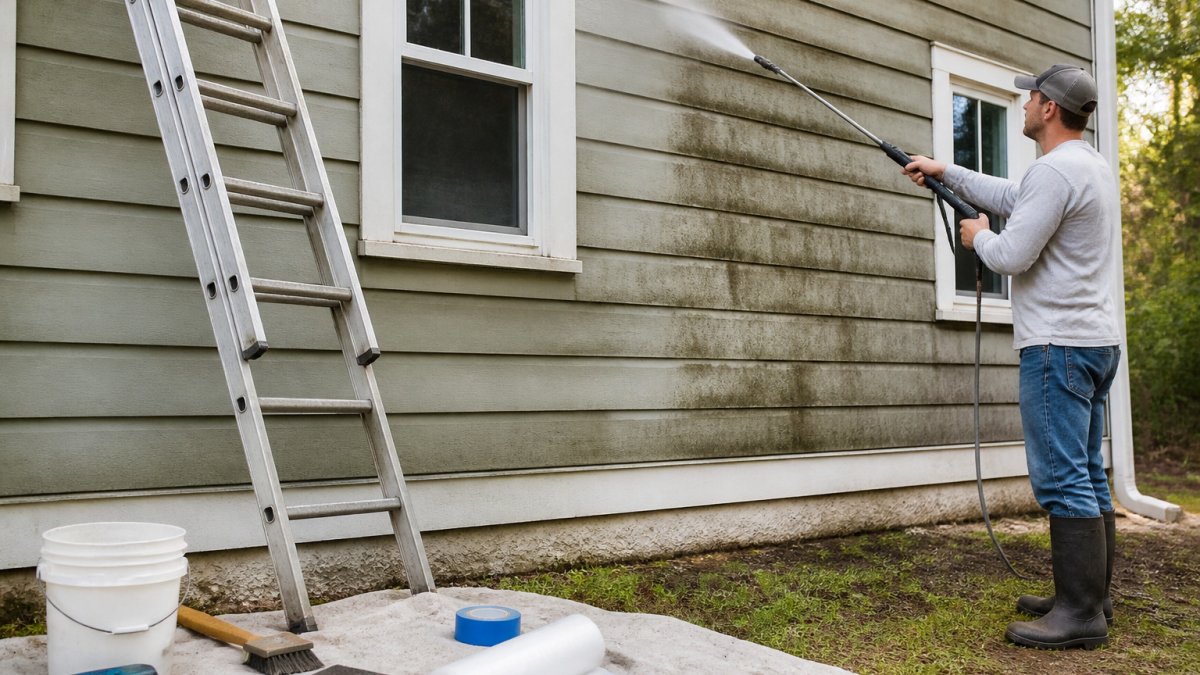
Pro Tip On many clay tile roofs, the safest and most effective method is a ground-up soft wash: stand on a stable ladder or the ground, use a long wand to apply cleaner and rinse at low pressure, and never put a foot on the tile. It protects both the worker and the roof.
If access, pitch, or tile condition makes you hesitate, that hesitation is the answer, consider contacting a licensed professional rather than improvising fall protection.
Mistake 6: Letting Runoff Damage Plants, Gutters, and Landscaping
Cleaning solution that runs off a roof has to go somewhere. Left unchecked, it stains siding, kills bedding plants, and loads gutters with debris.
Protect the areas below before you start:
Cover or rinse plants before and after
Divert runoff away from garden beds
Clear gutters of loosened debris
Rinse downspout areas with clean water
If your gutters are already clogged, that runoff has nowhere to go. Our gutter cleaning in Charleston and Mount Pleasant, SC can help clear buildup so water drains the way it should. Our services can help clear buildup so water drains the way it should.
Mistake 7: Underestimating Professional Roof Cleaning Cost
Professional roof cleaning cost is usually lower than the cost of repairing a cracked tile roof. That is the trade most homeowners miss.
Pricing depends on roof size, pitch, access, and how much organic growth is present. A heavily mossed roof takes longer and needs more treatment. A simple rinse on a low-slope roof takes far less.
Before you book, get a clear written estimate. Ask what the price includes and whether treatment for regrowth is part of it.
Watch out: The cheapest quote often means high pressure and no treatment. You pay less now and pay a roofer later.
When to Call a Licensed Roofing Professional
Some roofs are past the point where cleaning is safe to do yourself. Call a licensed roofing professional if you see:
Multiple cracked or missing tiles
Sagging areas or soft spots
Active leaks inside the home
A roof older than its expected service life
Heavy growth that has lifted tiles
A roofing contractor can assess tile condition and make repairs before cleaning. Cleaning a failing roof only speeds up the failure.
At Sunshine Pressure Washing and Window Cleaning, we use gentle wash techniques and high-quality cleaning agents to protect your surfaces. Our team is licensed and insured, and we handle both residential and commercial properties. We remove organic growth like moss, mold, algae, and bacteria without damaging the tile.
Frequently Asked Questions
Can you pressure wash a clay tile roof?
No. Pressure washing a clay tile roof can crack tiles, strip the surface glaze, and force water under the tiles into the roof deck. Clay tiles are fragile and become more brittle with age. The safe method is soft washing, which uses low pressure and a cleaning solution to kill organic growth rather than blasting it off. If a contractor offers to pressure wash your clay tile roof, that is a warning sign.
How often should clay tile roofs be cleaned?
Most clay tile roofs in humid climates benefit from cleaning every two to three years. Roofs under heavy tree cover or with north-facing slopes that stay damp may need cleaning more often. A zinc strip installed near the roof peak can slow moss regrowth between cleanings. Inspect your roof each spring for early signs of moss, algae, or lichen so you can address growth before it spreads.
Is it safe to walk on a clay tile roof?
Walking on a clay tile roof is risky. Tiles crack under concentrated weight, and the surface becomes slippery when wet or covered in algae. Professionals use roof harnesses, fall protection anchors, and foam padding or roof ladders to distribute weight and avoid tile damage. Homeowners should stay off the roof entirely and inspect from the ground with binoculars or call a licensed roofing professional.
What kills moss on roofs naturally?
A mixture of water and mild dish soap or a non-acidic cleaner can kill moss without harming clay tiles. Bicarbonate of soda applied to moss patches also works as a natural option. Avoid vinegar on clay tiles because its acidity can etch the surface over time. After treatment, gently brush away dead moss and rinse at low pressure. For widespread growth, a licensed professional can apply a roof-safe cleaning solution.
A clay tile roof rewards the homeowner who cleans it gently and on schedule. The wrong method costs far more than the right one.
Get started with Sunshine Pressure Washing and Window Cleaning and protect your roof with a safe, low-pressure soft wash. Request your free quote today.
GET A QUOTE
Add sunshinepressurewashingandwindowcleaning.com as a preferred source on Google →

Comments