
How to Clean Siding Without Damage: Safe Methods
Table of Contents
Why Siding Damage Happens and How to Prevent It
Tools and Cleaning Solutions for Safe Siding Cleaning
Buy vs. Rent: A Cost-Benefit Check
Essential Equipment
Mixing Your Cleaning Solution
Soft Washing Siding Benefits Over Pressure Washing
Best Cleaning Solutions for Vinyl Siding
How to Remove Mold from Siding Safely
Step-by-Step Siding Cleaning Process
Step 1: Prep the Area and Protect Landscaping
Step 2: Mix Your Solution at the Right Ratio
Step 3: Apply Bottom-Up, in Manageable Sections
Step 4: Rinse Top-Down at Low Pressure
Step 5: Final Rinse and Inspection
Troubleshooting Stains and Seasonal Timing
Conclusion: Protecting Your Home's Exterior Long-Term
Frequently Asked Questions
Last Updated: October 2, 2026
Why Siding Damage Happens and How to Prevent It
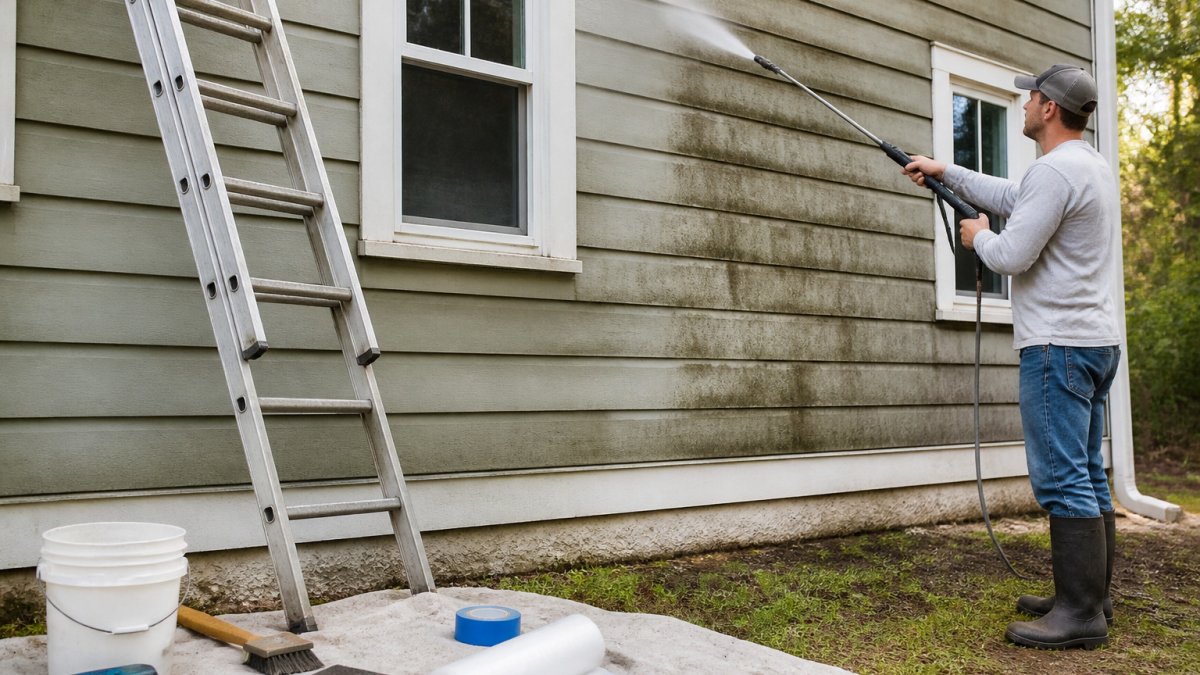
Siding damage almost always comes from too much pressure, the wrong cleaner, or both. When you learn how to clean siding without damage, you protect the surface and the paint at the same time, and that same care shows in every clean siding job done right.
Vinyl, wood, and aluminum all react differently to water and chemicals. Push a power washer past the safe limit and you can force water behind the panels. That traps moisture and feeds rot.
Here's the good news: safe methods exist, and they are not slow.
This guide covers the tools, solutions, and steps that keep your exterior intact.
The three most common causes of damage:
Pressure set too high for the material
Harsh chemicals left on too long
Spray aimed upward, forcing water behind panels
Watch Out Never aim a spray nozzle upward under a panel edge. Water gets behind the siding and can't escape, which leads to rot and peeling paint within a season.
Tools and Cleaning Solutions for Safe Siding Cleaning
The right kit matters more than raw power. Most jobs need a garden hose, a soft-bristle brush, and a mild detergent mixture, not a gas-powered washer. But before you buy anything, decide whether you actually need to own the gear at all.
Buy vs. Rent: A Cost-Benefit Check
A basic homeowner setup, pump sprayer, extension-pole brush, hose nozzle, and a jug of cleaner, runs well under what a single professional wash costs, and it lasts for years of touch-ups. That math favors buying if you clean once or twice a year.
Renting makes sense when:
You have a two-story home and no safe way to reach the upper wall.
You need a soft-wash system (low-pressure pump plus a downstream injector) for a one-time heavy mildew problem.
You are prepping a house for sale and want a single, thorough pass.
A common pattern is that homeowners rent a pressure washer, then damage siding because they use the wrong tip or too much pressure.
Essential Equipment
Gather these before you start:
Garden hose with an adjustable nozzle attachment
Soft-bristle brush on an extension pole (reach at least 10 feet)
Pump sprayer for even solution application
Bucket for mixing solution
Safety goggles, nitrile gloves, and a respirator if you use bleach
Drop cloths or plastic sheeting for landscaping
A 40-degree (white) pressure-washer tip if you use a machine
Mixing Your Cleaning Solution
A simple detergent mixture handles most organic growth. Mix mild soap with warm water in your bucket.
Pro Tip Test any solution on a small hidden patch first. Wait ten minutes, then rinse. If the color holds, you're safe to continue. This is also the fastest way to catch a finish that will streak under bleach.
Watch Out Never mix bleach with ammonia, vinegar, or any acid-based cleaner in the same container. The reaction releases toxic gas. Rinse your bucket and sprayer thoroughly between solutions.
Soft Washing Siding Benefits Over Pressure Washing
Soft washing siding uses low pressure and cleaning agents to lift dirt, algae, and mildew. Pressure washing relies on force alone, and force is what cracks panels and strips paint.

Soft washing wins on several fronts:
No surface damage to vinyl, stucco, or wood
Kills mold and algae at the root, not just the surface
Results last longer between cleanings
Safe for painted and aged materials
Best Cleaning Solutions for Vinyl Siding
Vinyl siding is tough, but it still scratches and fades. The best cleaning solutions for vinyl siding are mild and free of abrasive grit.
Home Rapid Repair
Start with a basic mix:
One part mild liquid soap to five parts water
A splash of vinegar for light mildew
A diluted bleach solution for stubborn algae
How to Remove Mold from Siding Safely
To remove mold from siding, use a diluted bleach solution and let it sit, then rinse gently. Scrubbing hard spreads spores and can damage the surface.
A safe approach:
Mix one part bleach to three parts water
Apply from the bottom up
Let it sit for ten minutes
Rinse from the top down
Step-by-Step Siding Cleaning Process
A steady, top-down process keeps water and dirt moving in the right direction. Rushing this part is where most DIY jobs go wrong. The sequence below is the same one professional soft-wash crews follow, scaled for a homeowner with a garden hose and a pump sprayer.
Step 1: Prep the Area and Protect Landscaping
This is the step most guides skip, and it is the one that saves your shrubs. Cleaning solution that runs off the wall and into a flower bed can burn foliage within a day.
Water plants thoroughly before you start. Saturated soil dilutes runoff and buffers roots.
Cover shrubs and flower beds with plastic sheeting, and weight the edges so wind does not flip it.
Close windows and doors tight. Move furniture, grills, and pet bowls away from the wall.
Turn off outdoor outlets and cover them. Water and electricity do not mix.
Direct runoff away from storm drains where local rules restrict soap discharge. Many municipalities treat anything entering a storm drain as an illicit discharge, so a simple sandbag berm or a sheet of plastic angled toward the lawn is worth the two minutes.
Step 2: Mix Your Solution at the Right Ratio
Ratios matter more than brand. A common pattern is:
Light organic growth (dust, pollen, spider webs): 1 cup mild liquid dish soap per 1 gallon of water.
Mildew and algae: 1 part plain household bleach (about 6% sodium hypochlorite) to 3 parts water, plus a squirt of soap to help it cling.
Wood or aluminum: swap bleach for white vinegar at 1 part vinegar to 1 part water to avoid oxidizing the finish.
Never mix bleach with ammonia or with vinegar in the same bucket. The combination releases toxic gas.
Step 3: Apply Bottom-Up, in Manageable Sections
Work in sections about 10 feet wide, from the bottom of the wall upward. Starting low prevents the streaky drip lines you get when solution runs down over dry, dirty siding.
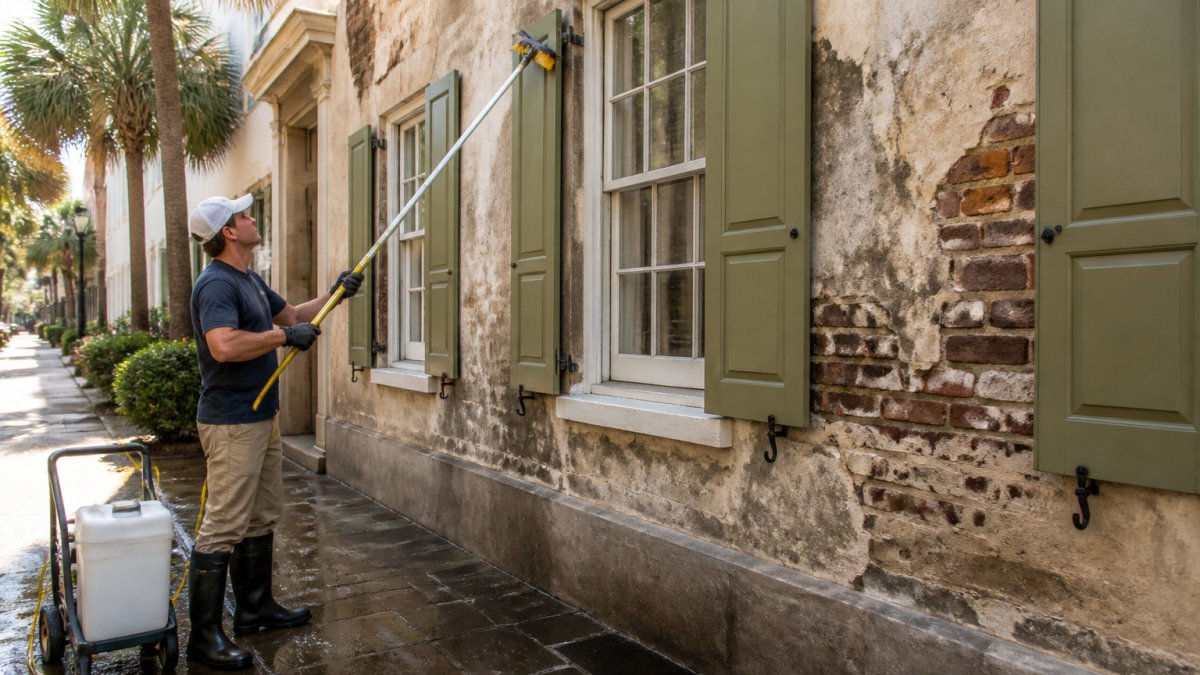
Use a pump sprayer or a soft-bristle brush on an extension pole.
Let the solution dwell 5 to 10 minutes. Do not let it dry on the surface.
For heavy growth, agitate lightly with the brush. Do not scrub hard, abrasion dulls vinyl and scuffs paint.
Step 4: Rinse Top-Down at Low Pressure
Rinse from the top of the section downward using a garden hose or a power washer on its lowest setting, keeping the nozzle at least 12 to 18 inches from the wall and angled slightly downward. Keep the nozzle moving so no single spot gets too much pressure.
Key Takeaway Bottom-up application and top-down rinsing is the single habit that prevents streaks and water getting behind panels. Pair it with pre-wetting plants and covering beds, and you protect both the siding and the landscape.
Step 5: Final Rinse and Inspection
Once the whole wall is done, do a plain-water rinse over the entire surface, including the ground within a few feet of the foundation, to dilute any residual cleaner. Walk the wall in daylight and look for missed patches, streaks, or water that has pooled behind a panel edge. If you see water weeping from a seam, stop and let it drain before continuing.
Troubleshooting Stains and Seasonal Timing
Some stains need special handling. Rust, grease, and oxidation each call for a different fix.
Stain Type | Best Fix | Watch Out For |
Rust | Oxalic acid cleaner | Test on hidden spot first |
Grease | Degreaser, then rinse | Don't let it dry on the surface |
Oxidation | Mild detergent, soft brush | Heavy scrubbing dulls the finish |
Mildew | Diluted bleach solution | Protect plants from runoff |
Watch Out Cleaning in full sun is the top cause of streaking. The solution dries before it can work, leaving a chalky film behind.
Conclusion: Protecting Your Home's Exterior Long-Term
Cleaning your siding the right way adds years to its life. The wrong method costs you paint, panels, and repair bills.
Frequently Asked Questions
What is the best thing to clean house siding with?
For most siding types, a soft wash solution of water, mild detergent, and sodium hypochlorite applied at low pressure works best. This removes mildew, algae, and dirt without forcing water behind panels. A garden hose with a nozzle attachment and a soft-bristle brush can handle light cleaning. For vinyl siding, a mix of 1 part white vinegar to 4 parts water also works for mild buildup. Always test a small area first and avoid abrasive tools that scratch the surface.
Is soft washing better than pressure washing for siding?
Soft washing is safer for siding because it uses low pressure (under 500 PSI) combined with cleaning solutions to kill mold and algae at the root. Pressure washing at high PSI can force water behind siding panels, strip paint, and damage wood or stucco. Soft washing siding benefits include longer-lasting results since the solution kills organisms rather than just blasting them off. For vinyl, wood, stucco, and aluminum siding, soft washing is the recommended method.
How often should you clean your home's siding?
Most homes need siding cleaning every 12 to 18 months. In humid climates with heavy tree cover, annual cleaning prevents mildew and algae from staining the surface. Vinyl siding may only need cleaning every 2 years if it's not in a shaded area. Check for green or black streaks, which indicate algae growth. Cleaning before it spreads saves money and protects your siding's finish. A maintenance schedule of once a year keeps curb appeal high and avoids costly repairs.
Can I use Dawn dish soap to clean my siding?
Dawn dish soap can remove light dirt and grease from vinyl siding, but it won't kill mold or mildew. For organic growth, you need a solution that addresses the root cause. Mix a few drops of Dawn with water in a bucket and scrub with a soft-bristle brush for small areas. Avoid using it on wood siding without rinsing thoroughly, as residue can attract dirt. For full-house cleaning, a dedicated siding cleaner or professional soft wash is more effective and safer for all siding materials.
GET A QUOTE

Comments