
Is Soft Washing Safe for Old Roofs? A 2026 Guide
Table of Contents
Why Old Roofs Need a Different Cleaning Approach
What Makes Aging Shingles Vulnerable
Is Soft Washing Safe for Old Roofs? What the Process Actually Does
Low Pressure, Chemical Dwell Time, and the Rinse Cycle
How to Safely Remove Moss From Roof Shingles Without Damage
Soft Wash Roof Cleaning Cost: What Homeowners Should Expect
The Cost Question Nobody Asks: Cleaning vs. Replacement
How Long Does Roof Soft Washing Last?
Warranty, Landscaping, and Material Concerns Nobody Talks About
Will Soft Washing Void Your Roof Warranty?
Protecting Landscaping and Pets From Cleaning Solution
Roof Material Changes the Answer
When Soft Washing Old Roofs Is the Wrong Call
Frequently Asked Questions
Last Updated: September 23, 2026
Why Old Roofs Need a Different Cleaning Approach
Old roofs are not just weathered versions of new ones. Their shingles have lost protective granules, their seals are weaker, and their underlying structure may already be compromised. That changes everything about how you clean them.
At Sunshine Pressure Washing and Window Cleaning, we've walked plenty of aging roofs and seen what happens when the wrong method hits them. This guide answers one question directly: is soft washing safe for old roofs? The short answer is yes, when it's done correctly. But "correctly" carries more weight on an old roof than a new one.
What Makes Aging Shingles Vulnerable
Asphalt shingles age in layers. The surface granules wash away first. Then the asphalt binder dries and cracks. Finally, the mat underneath weakens.
Once granules are gone, the shingle has no armor. A hard spray strips what's left. Even a moderate rinse can lift tabs that have lost their seal. Add years of sun and rain, and the roof is running on borrowed time.
That's why old roofs need a gentler touch, not a stronger one.
Is Soft Washing Safe for Old Roofs? What the Process Actually Does
Soft washing is safe for old roofs because it cleans with low pressure and cleaning solutions rather than force. The method relies on chemical dwell time to break down organic growth, then a gentle rinse to wash it away.
High pressure is what damages shingles. Soft washing removes that risk entirely.

Low Pressure, Chemical Dwell Time, and the Rinse Cycle
The process runs in three stages:
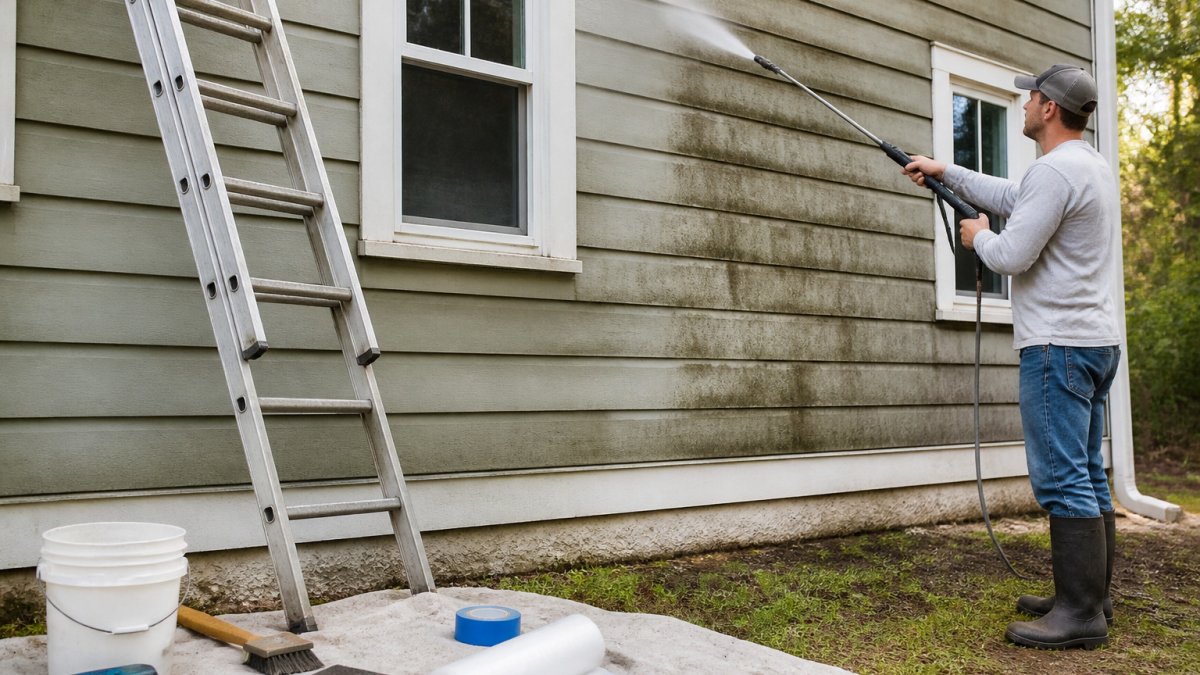
Low-pressure application. A pump delivers the cleaning solution at roughly the pressure of a garden hose.
Chemical dwell time. The solution sits on the roof, dissolving algae, moss, and lichen at the root.
Rinse cycle. A gentle rinse carries the dead growth away.
No step uses force. The chemistry does the work.
Key Takeaway Soft washing cleans old roofs by dissolving organic growth, not blasting it off. Pressure is never the tool that removes the stain.
How to Safely Remove Moss From Roof Shingles Without Damage
Removing moss from roof shingles without damage means killing it at the root before you touch it. Moss anchors into the shingle surface. Pull it off dry, and you take granules with it.
Radiant Clean
Here's the safe sequence:
Treat the moss with a cleaning solution and let it dwell
Wait for the moss to die and release its grip
Rinse gently, working top to bottom
Clear gutters so debris doesn't back up
Never scrape or pressure-wash moss off a shingle roof. That's the mistake that shortens roof life.
According to the Asphalt Roofing Manufacturers Association, organic growth left unchecked can shorten the service life of asphalt shingles.
Watch Out Pulling moss off by hand feels satisfying and does real damage. The roots tear granules loose, leaving bare patches that age faster than the rest of the roof.
Soft Wash Roof Cleaning Cost: What Homeowners Should Expect
Soft wash roof cleaning cost depends on roof size, pitch, and how much growth has taken hold. A steep roof or heavy moss means more time, more solution, and a higher quote. Most homeowners should expect a range, not a flat fee. The final price reflects:
Total roof square footage
Roof pitch and height
Severity of algae, moss, or lichen
Whether gutters and landscaping need protection
Whether the roof is walkable or requires fall-protection setup
Get an on-site quote before you commit. A phone estimate can't see the moss.
The Cost Question Nobody Asks: Cleaning vs. Replacement
Most articles stop at the cleaning quote. The number that actually matters is the spread between cleaning and replacing. A soft wash is a maintenance expense. A premature replacement is a capital expense, often several times larger, plus disposal, decking repairs, and the risk of discovering hidden damage once the old shingles come off.
The math homeowners should run:
How old is the roof? If it's inside the back half of its expected service life, cleaning buys time. If it's already past it, cleaning is cosmetic.
Is the damage organic or structural? Algae, moss, and lichen are surface problems. Curling, cracking, and granule loss are structural. Cleaning fixes the first; nothing fixes the second except replacement.
What does deferral cost? Every year of service you get out of an existing roof is a year you're not financing a new one. That's the real return on a soft wash.
A common pattern is that homeowners who soft wash on a maintenance schedule get more years out of the same roof than homeowners who wait for visible damage and then pressure wash it. The cleaning method is part of the lifespan equation, not separate from it.
the International Association of Certified Home Inspectors notes that roof cleaning methods should match the roof material to avoid voiding coverage or causing damage.
Pro Tip Ask any contractor how they protect landscaping before they start. A pro plans for runoff. A rookie hoses your shrubs with cleaning solution.
Key Takeaway Compare the soft wash quote to the replacement quote, not to zero. The right question isn't "what does cleaning cost", it's "how many years does this cleaning buy me, and what would those years cost otherwise?"
How Long Does Roof Soft Washing Last?
Roof soft washing typically lasts one to three years before new growth appears, depending on shade, humidity, and tree cover. Homes under heavy shade see algae return sooner.
The treatment kills existing growth. It does not stop spores from landing later. That's why preventative maintenance matters.
Frequency | Action | Why It Helps |
Every 1-2 years | Full soft wash | Removes new growth early |
Every 6 months | Visual inspection | Catches moss before it spreads |
After storms | Gutter check | Prevents debris buildup and water damage |
Warranty, Landscaping, and Material Concerns Nobody Talks About
This is where most roof cleaning articles go quiet, and it's where the real risk lives. Three things can turn a routine soft wash into an expensive problem: your warranty, your landscaping, and the material your roof is actually made of.
Will Soft Washing Void Your Roof Warranty?
Roof warranty terms often require specific cleaning methods, and pressure washing can void coverage. That's the detail most homeowners learn too late.
What to do before you book:
Pull your warranty document and read the maintenance section, not just the coverage section
Note any language about approved cleaning agents or pressure limits
Ask the contractor to confirm in writing that their method complies
Keep the invoice, it's your proof of method if a claim ever comes up
Protecting Landscaping and Pets From Cleaning Solution
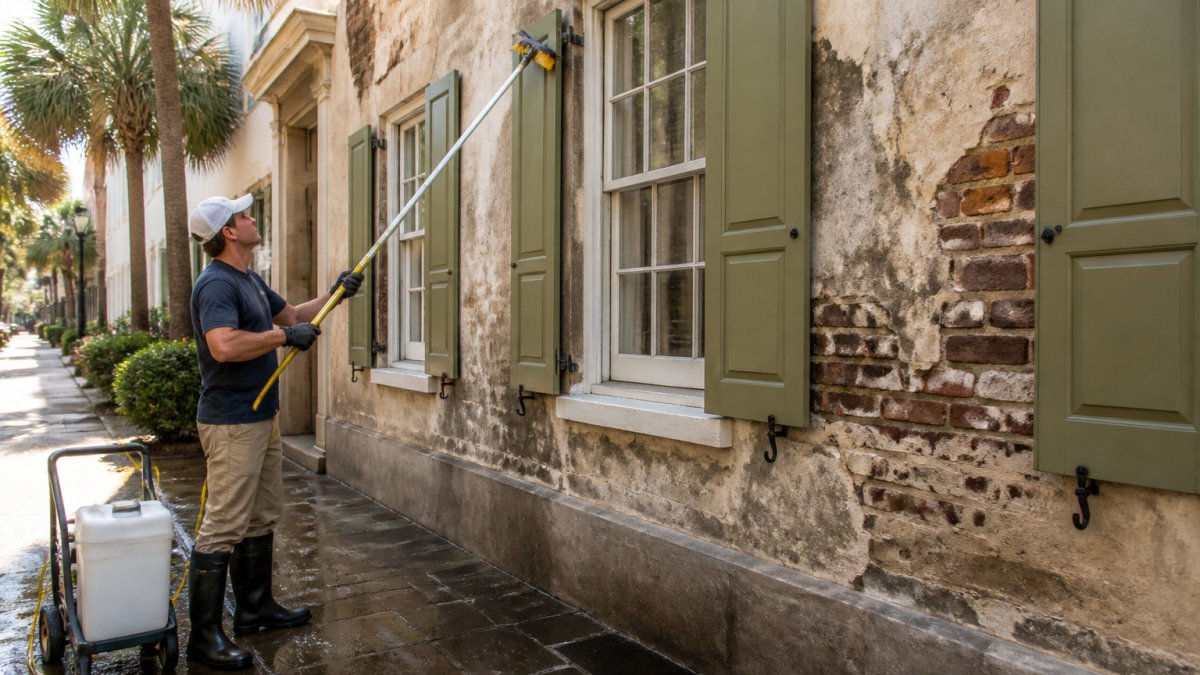
Cleaning agents that kill algae will also stress plants. A responsible crew pre-wets plants and controls runoff. That's the baseline, not the whole story.
What proper protection actually looks like:
Pre-wetting. Plants, grass, and soil around the drip line get soaked with plain water before any solution is applied, so roots and leaves absorb clean water first.
Covering. Delicate shrubs and ornamentals get plastic sheeting or drop cloths.
Runoff control. Gutters and downspouts are directed away from garden beds, and the crew rinses surfaces after the dwell time ends.
Timing. Cleaning on a calm day with no rain in the forecast keeps solution where it's supposed to be.
Watch Out If a contractor can't explain how they protect your warranty and your landscaping, walk away. Those two costs can dwarf the cleaning bill.
Roof Material Changes the Answer
"Old roof" isn't one thing. Asphalt shingles, clay tile, and metal each handle cleaning differently, and the wrong solution can do damage that pressure alone never would.
Asphalt shingles. Soft washing suits them best. They tolerate the standard low-pressure, chemical-dwell approach, and they're the material most soft wash guidance is written for.
Clay and concrete tile. These are more porous and can be more fragile with age. Solutions may need to be adjusted, and walking the roof at all is a risk on brittle tile. Some tile also has a factory finish that certain chemicals can dull.
Metal roofs. Generally durable, but the wrong cleaner can stain or strip a painted finish. Fasteners and seams deserve a look before any water hits them.
Wood shakes and shingles. The most delicate of the group. They absorb moisture, and aggressive cleaning can accelerate rot.
When Soft Washing Old Roofs Is the Wrong Call
Soft washing is not always the answer. Some old roofs are past cleaning.
Skip soft washing if your roof has:
Missing, cracked, or curling shingles
Visible sagging or soft spots
Active leaks or water stains on ceilings
Bare spots where granules are gone
Frequently Asked Questions
How long does soft washing a roof last?
Most soft wash roof treatments keep a roof clean for one to three years, depending on shade, humidity, and how much organic growth was present. In humid climates with heavy tree cover, algae and gloeocapsa magma can return sooner. Scheduling preventative maintenance every 18 to 24 months helps extend results and protects shingle granules between full cleanings.
Does soft washing damage asphalt shingles?
Soft washing uses low pressure, typically under 500 PSI, which is far gentler than pressure washing. The cleaning relies on biodegradable solutions and surfactants that kill algae spores and moss at the root rather than blasting them off. This approach preserves shingle granules and avoids the high-pressure damage that strips protective coatings and voids roof warranties.
What is the average cost to soft wash a roof?
Soft wash roof cleaning cost varies by roof size, pitch, and how much moss or lichen is present. Bundling roof cleaning with house washing often reduces the total. Request a written quote that itemizes the treatment and rinse cycle before committing.
How often should you soft wash an old roof?
For older roofs, a soft wash every 18 to 24 months is a reasonable preventative maintenance schedule. If your roof is heavily shaded or you notice dark streaks returning within a year, annual treatment may be necessary. Regular cleaning removes algae spores before they spread, supports structural integrity, and helps maintain curb appeal and property value.
GET A QUOTE

Comments