

Why Algae Returns After Cleaning: Pool Fix Guide
Table of Contents
Why Algae Return After Cleaning: The Real Causes
Insufficient Chlorine and Sanitizer Failures
pH, Cyanuric Acid, and Water Chemistry Imbalances
Poor Circulation, Filtration, and Filter Troubleshooting
Sand Filters
Cartridge Filters
DE Filters
Common Flow Problems Beyond the Filter
Pool Algae After Shocking: Why It Survives
Dead Algae Returning After Vacuuming: Diagnosis and Fix
Step 1: Remove the Bulk Deposit
Step 2: Brush Every Surface
Step 3: Shock and Hold Chlorine
Step 4: Clean the Filter
Step 5: Verify With Testing
How to Prevent Pool Algae From Returning
Pool Chlorine Level for Algae Prevention
Frequently Asked Questions
Last Updated: October 20, 2026
Why Algae Return After Cleaning: The Real Causes
Algae return after cleaning because the conditions that let it grow were never fixed. Cleaning removes the visible growth, but chlorine, pH balance, circulation, and filtration decide whether it comes back.
That cycle has a cause, and it is almost never the cleaning itself.
Algae return is the regrowth of green, yellow, or black growth on a surface after it has been cleaned, and it happens when moisture, nutrients, and weak sanitation stay in place. The Centers for Disease Control and Prevention guidance on pool water notes that free chlorine is what kills germs and algae in treated water, so a low reading is a warning sign.
Below, we walk through each cause in order, then give you a diagnostic sequence that separates live algae from dead algae and filter debris.
Key Takeaway Cleaning removes the symptom. If chlorine, pH, or circulation is off, algae return is a matter of when, not if.
Insufficient Chlorine and Sanitizer Failures
Low free chlorine is the most common reason algae return after cleaning. Chlorine gets used up fast in warm water, heavy sun, and busy pools, so a reading that was fine on Monday can be too low by Thursday.
Watch for these failure points:
Chlorine sitting below the target range for even a day or two
Stabilized chlorine products that build up over time
A dirty feeder or floater that stops delivering tablets
Many pool owners shock once, see clear water, and stop testing. That gap is where algae return starts. Keep a simple log of free chlorine and add sanitizer before the reading drops, not after.
pH, Cyanuric Acid, and Water Chemistry Imbalances
Water chemistry problems make chlorine weak even when the level looks fine. pH controls how well chlorine works, and high pH cuts its killing power. Cyanuric acid, also called stabilizer, protects chlorine from sunlight but locks it up when it climbs too high.
That second point is the one most guides skip. A pool can show a normal chlorine reading and still have almost no active sanitizer because the stabilizer level is too high.
Check these numbers weekly:
Free and total chlorine
pH
Phosphates, which feed algae growth
Phosphates do not cause algae by themselves, but they are food. Removing the food source makes the next bloom slower and easier to control.
Poor Circulation, Filtration, and Filter Troubleshooting
Poor water flow is the quiet cause behind a lot of algae return. If the pump runs too few hours or the filter is clogged, sanitizer never reaches the corners, steps, and seams where algae growth starts.
Filter faults are mentioned in most guides, but few explain how to inspect each type. Here is a practical guide to finding the problem.
Sand Filters
Sand filters trap debris in the sand bed. Two failures let debris and algae straight back into the pool:
Channeling: Water carves channels through the sand, so most of the bed never gets filtered. Signs include a pressure gauge that stays low even when the pool is dirty, and debris returning through the returns. To check, shut off the pump, open the filter, and look for cracks or hollows in the sand surface. If the sand is clumped or channeled, break it up and re-level it; if the sand is more than about five years old, replace it.
Broken laterals: The slotted pipes under the sand can crack, letting sand and debris bypass into the pool. Signs include sand on the pool floor near the returns and a pressure gauge that reads low. To check, remove the sand and inspect the laterals for cracks; replace any damaged lateral.
Backwash when the gauge rises 8 to 10 psi above clean pressure, and never backwash longer than needed, since over-backwashing can disturb the sand bed.
Cartridge Filters
Cartridge filters have no backwash cycle, so clogging is the main failure. A clogged cartridge raises pressure and cuts flow, and a torn pleat lets debris bypass entirely.
Clogged pleats: Remove the cartridge and hold it up to light. If you cannot see light through the pleats, it is clogged. Rinse with a hose from the inside out, then soak in a filter cleaner if the pleats stay greasy.
Tears and collapsed pleats: Inspect the pleats for rips, holes, or crushed sections. A torn cartridge must be replaced; a patch will not hold. Also check the end caps and the center core for cracks.
Most manufacturers recommend replacing cartridges every one to three years, depending on use. Keep a spare set so you can swap and soak without downtime.
DE Filters
DE filters use grids coated with diatomaceous earth. Two failures are common:
Torn grids: A rip in a grid lets DE and debris pass into the pool. Signs include DE powder on the pool floor and a pressure gauge that reads low. To check, backwash, open the filter, and inspect each grid for tears; replace damaged grids.
Low DE charge: After backwashing, the filter must be recharged with DE. If you skip the recharge, the grids have no coating and filtration drops. Add DE through the skimmer according to the filter label, usually about 1 pound per 10 square feet of filter area.
Common Flow Problems Beyond the Filter
A clogged pump basket or air in the system also cuts flow. Check the pump basket weekly and bleed air from the filter after any service. A pump that runs dry or sucks air will lose prime and stop moving water, which lets algae gain a foothold.
Watch Out Skipping backwashing or filter cleaning until pressure climbs high means water is bypassing the media. Algae and debris go straight back into the pool.
Pool Algae After Shocking: Why It Survives
Pool algae after shocking survives because the shock dose was too small, the chlorine was burned off by sun, or the algae was hiding in biofilm on surfaces and inside the filter. Shocking clears the water column but does not scrub the walls.
Follow these steps to make shock work:
Brush every surface first so the shock can reach the growth
Shock at dusk to limit sunlight loss
Run the pump continuously for at least 24 hours
If the water stays green after a proper shock, test cyanuric acid. High stabilizer is the usual reason chlorine does not hold.
Dead Algae Returning After Vacuuming: Diagnosis and Fix
Dead algae returning after vacuuming is usually dead growth that settled on the pool floor and seams, or debris the filter pushed back through the returns. The water looks clear, then a brown-green cloud appears the next morning.
Here is the diagnostic sequence we recommend:

Test the water. Normal chlorine and pH point to dead algae or debris, not a live bloom.
Watch the return jets. A cloud that appears only when the pump runs means filter bypass.
Touch the deposit. Slimy and green means live algae. Powdery and gray-brown means dead algae.
Check the filter. A torn cartridge or broken lateral lets debris straight back in.
Once you confirm the deposit is dead algae or filter debris, follow this recovery protocol. It turns scattered advice into a measurable plan.
Step 1: Remove the Bulk Deposit
Vacuum to waste when the deposit is heavy so it leaves the pool instead of the filter. Move the vacuum head slowly; rushing stirs the deposit back into the water, and the filter cannot catch what never reaches it. Vacuum the floor, then the seams and corners where dead algae collects.
Step 2: Brush Every Surface
Brush walls, steps, seams, and the waterline. Dead algae clings to surfaces, and brushing lifts it into the water column where the filter can capture it. Brush before you shock, not after.
Step 3: Shock and Hold Chlorine
Shock at dusk to limit sunlight loss, and run the pump continuously for at least 24 hours. Then hold free chlorine at the high end of the recommended range until the water clears and chlorine demand drops. Test free chlorine twice a day during this period; if it falls below the target, add more sanitizer. A common pattern is that chlorine demand stays high for two to three days after a bloom, then drops sharply as the dead algae is filtered out.
Step 4: Clean the Filter
After the bloom clears, clean the filter. Backwash a sand or DE filter, or rinse and soak a cartridge. A filter loaded with dead algae will clog quickly and cut flow, which invites the next bloom.
Step 5: Verify With Testing
Test free chlorine, pH, and cyanuric acid daily until the water stays clear for a week. If chlorine cannot hold, test cyanuric acid; high stabilizer is the usual reason chlorine does not hold. Once the water is stable, move to the weekly routine in the prevention section.
Pro Tip Vacuum slowly. Rushing stirs the deposit back into the water, and the filter cannot catch what never reaches it.
How to Prevent Pool Algae From Returning
Preventing algae return comes down to a routine, not a single treatment. The pools that stay clear are the ones tested and brushed on a schedule, not the ones shocked hardest.
Build this weekly routine:
Test free chlorine and pH daily in summer
Brush walls, steps, and seams weekly
Clean the pump basket and skim leaves weekly
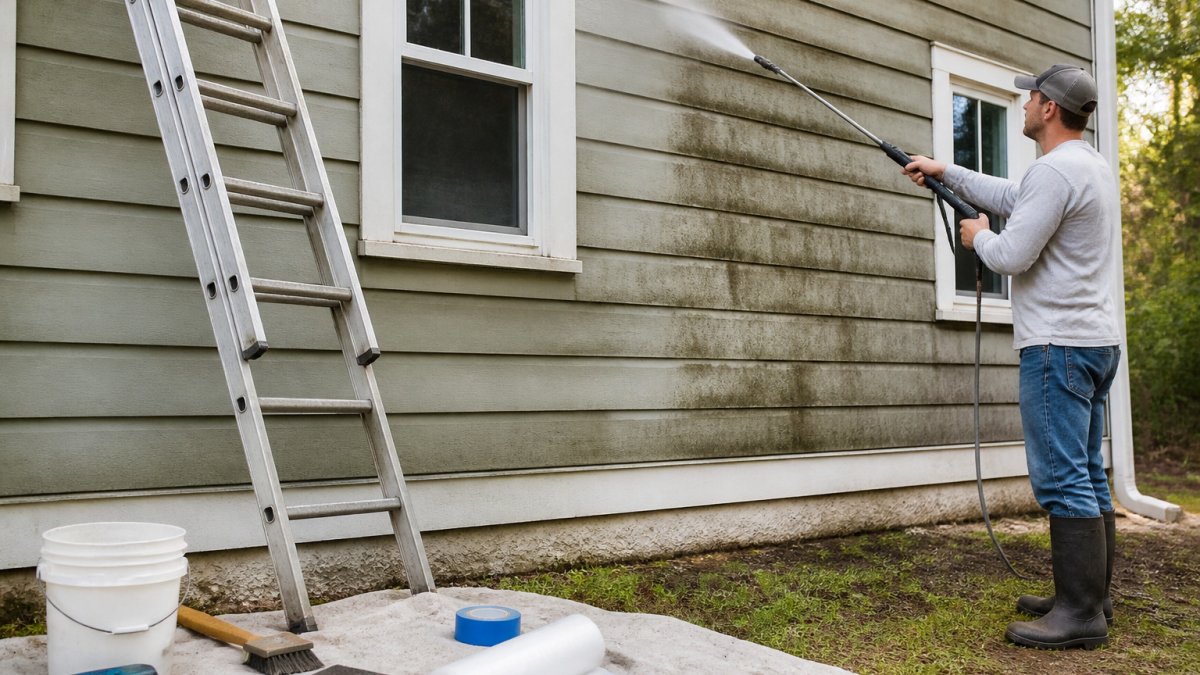
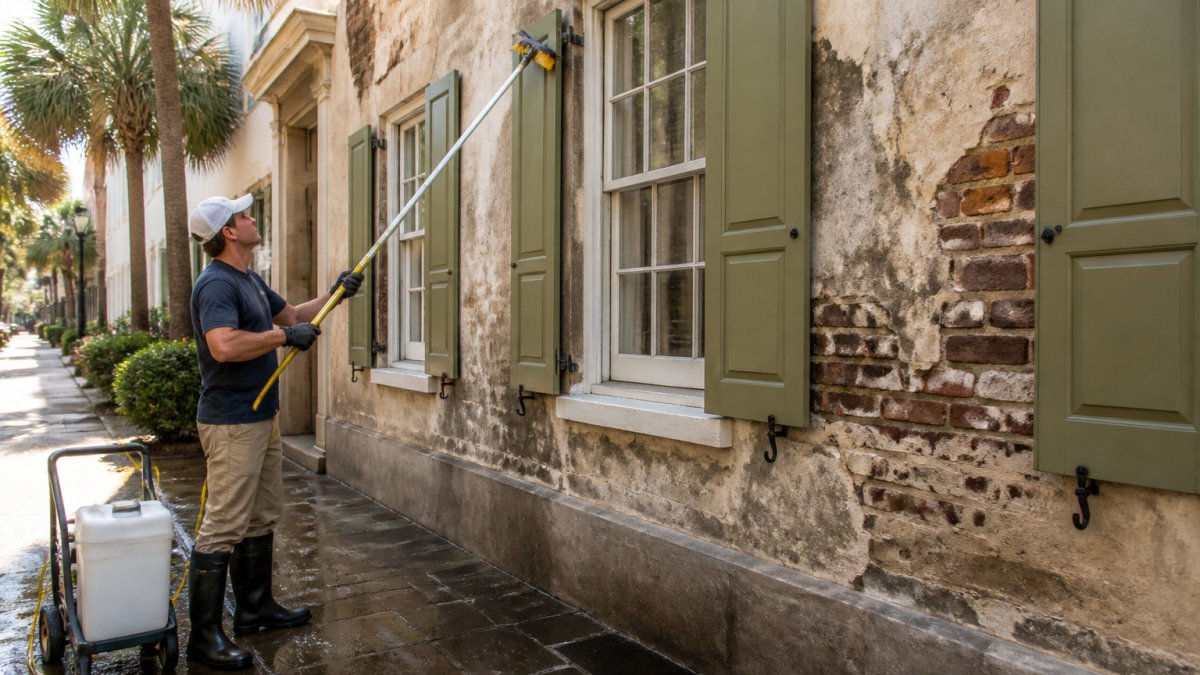
Keep the pool covered during off-season and remove leaves and insects quickly. If your hard surfaces outside the pool, such as decks, driveways, and siding, keep growing green film, that points to the same moisture and organic buildup problem.
Pool Chlorine Level for Algae Prevention
The pool chlorine level for algae prevention is a free chlorine reading that stays in the recommended range every day, not just on test day. The CDC guidance on pool operation advises testing free chlorine frequently and keeping it in the operating range for your pool type.
A practical checklist:
Test free chlorine daily during swim season
Keep cyanuric acid in range so chlorine is not locked up
Add sanitizer before the level drops, not after
If you cannot hold chlorine for more than a day, the problem is usually stabilizer, not dose size. Fix the chemistry first, then treat.
Frequently Asked Questions
Why do I still have algae in my pool after shocking it?
Shocking adds chlorine, but it does not fix the underlying problem. If your cyanuric acid level is high, the chlorine is locked up and cannot kill algae. If your pH is above 7.8, the chlorine is far less effective. If your filter is clogged or channeled, dead algae stays in the water. Test pH, cyanuric acid, and free chlorine before you shock, and brush the walls and floor so the algae is exposed to the sanitizer.
Why does dead algae keep returning after vacuuming?
Dead algae returning after vacuuming usually means you vacuumed on filter setting instead of waste. Dead algae is fine enough to pass through a sand filter and blow back into the pool through the returns. Vacuum to waste, keep the filter on waste until the water runs clear, and top the pool back up afterward. Also check for algae hiding in seams, behind ladders, and in the skimmer throat.
Does low chlorine cause pool algae to return?
Yes. Algae return is almost always a chlorine problem. Free chlorine needs to stay in the 1 to 3 ppm range for a clear pool, and higher during a bloom. Rain, heavy swimmer load, sunlight, and high cyanuric acid all eat into your chlorine level. Test daily during warm months and dose in the evening so the chlorine works overnight instead of burning off in the sun.
What chlorine level prevents algae from coming back?
Keep free chlorine at 1 to 3 ppm with cyanuric acid between 30 and 50 ppm for a typical outdoor pool. If you have had a bloom, hold free chlorine at the shock level shown on your test kit until the water clears and overnight chlorine loss is under 1 ppm. Test every morning, and adjust dose based on the reading, not a calendar.
Algae that keeps coming back is a signal, not bad luck. The cause is almost always in the water chemistry, the filter, or the cleaning routine. If organic growth keeps returning to your pool deck, driveway, roof, or siding, Sunshine Pressure Washing and Window Cleaning can help. We are licensed and insured, we use high-quality cleaning agents and gentle wash techniques that protect your surfaces, and we serve both homes and businesses. Get a quote today and stop the cycle for good.
GET A QUOTE

Comments