

Why Mold Returns After Cleaning: Prevention Guide
Table of Contents
Why Mold Returns After Cleaning
Moisture: The Root Cause of Recurring Mold
Surface Cleaning Doesn't Address Hidden Sources
How to Stop Mold from Coming Back After Cleaning
Identify and Fix the Moisture Source
Control Humidity and Improve Ventilation
Use Appropriate Cleaning Treatments
How Long Does Mold Take to Return After Cleaning
Mold Keeps Coming Back in the Same Spot: What's Happening
Persistent Moisture in One Location
Porous Materials Retain Mold Spores
How to Remove Mold from Siding Effectively
Assess the Siding Material First
Gentle Cleaning vs. Pressure Washing
When to Call a Professional
Common Mistakes That Lead to Mold Regrowth
Verify the Problem Is Resolved
Use Tools, Not Just Your Eyes
Set a Realistic Observation Window
Signs the Fix Is Holding
Signs You Missed Something
Build a Maintenance Schedule
When to Bring In a Professional
Conclusion
Frequently Asked Questions
Last Updated: October 13, 2026
Why Mold Returns After Cleaning
Mold keeps coming back because cleaning the surface doesn't solve the underlying problem: if moisture is still present, the mold will return. Homeowners clean their siding, roof, or driveway, and within weeks the dark spots reappear.
Mold returns after cleaning because three things typically go wrong: moisture isn't controlled, cleaning doesn't reach deep into porous materials, or the conditions that allowed mold to grow in the first place remain unchanged.
Moisture: The Root Cause of Recurring Mold
Mold spores exist everywhere, in the air, on your roof, on your siding right now. The only thing stopping them from growing is moisture. Remove it and mold can't survive; leave it and mold will return. You can't eliminate spores or darkness in crawl spaces and under roof overhangs, but you can control moisture, and that's where most people fail.
Common moisture sources include:
Leaks in roofs, gutters, or downspouts
Water intrusion around windows or doors
Condensation from poor ventilation
Surface Cleaning Doesn't Address Hidden Sources
When you clean mold off siding or a roof, you're removing what you can see. But mold penetrates porous materials like wood, drywall, and some types of siding, and viable mold, living spores capable of regrowing, can exist deep inside. A pressure washer or bleach solution kills surface mold but often misses what's underneath, especially on wood siding where mold works into the grain.
How to Stop Mold from Coming Back After Cleaning
Preventing mold regrowth requires a three-part approach: fix the moisture source, control humidity and airflow, and use the right cleaning treatment for the material involved.
Identify and Fix the Moisture Source
This is the most important step. If you skip it, nothing else matters. Start by asking: where is the moisture coming from? Check gutters and downspouts, clogged gutters trap water against your roof and siding.
Common fixes include:
Cleaning gutters and extending downspouts away from the foundation
Caulking gaps around windows and doors
Repairing roof damage
These fixes prevent water from reaching the surfaces where mold grows. Without them, cleaning is temporary.
Control Humidity and Improve Ventilation
Mold thrives in humid environments, indoor humidity above 50% is an ideal breeding ground, and poor ventilation traps that moisture indoors (the CDC).
Improving airflow is simple but effective:
Run exhaust fans during and after showers
Open windows when weather permits
Use a dehumidifier in damp rooms
Outdoor ventilation matters too: if siding stays damp because it's shaded with poor airflow, mold returns faster. Trimming trees or improving circulation helps.
Use Appropriate Cleaning Treatments
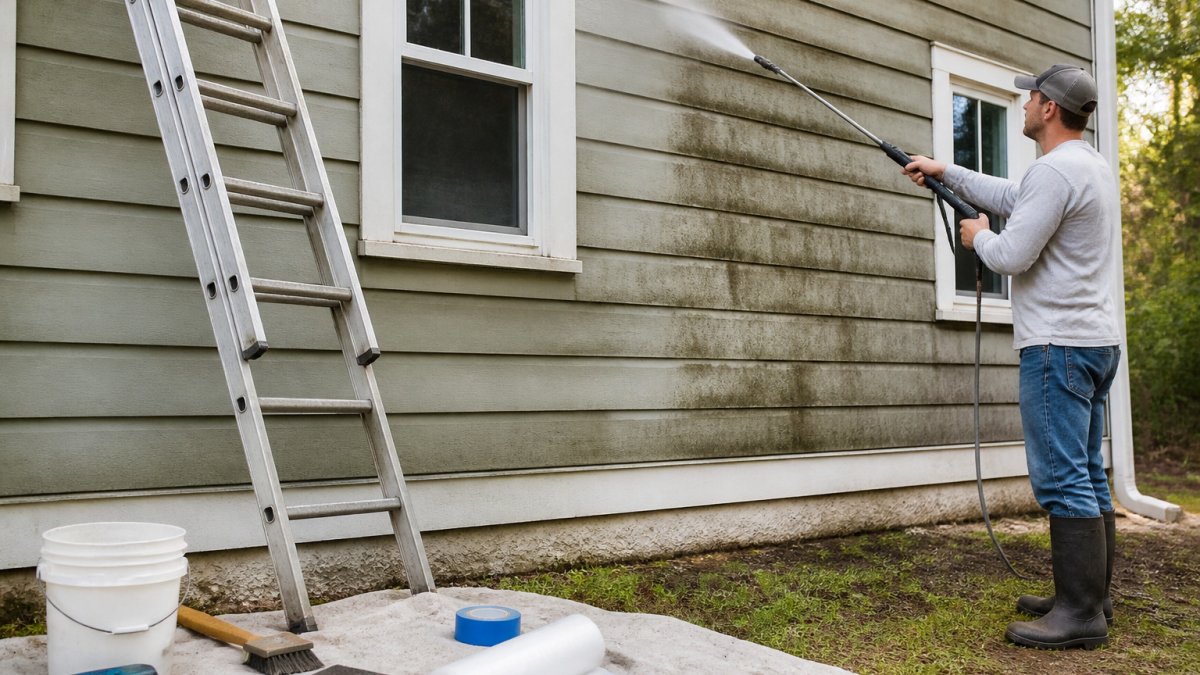
The cleaning method matters. Bleach kills surface mold quickly but doesn't penetrate porous materials well, doesn't prevent regrowth, and can damage or discolor wood. For porous materials, soft washing, low-pressure water mixed with cleaning agents, kills mold at the source without damaging the material. For nonporous surfaces like vinyl, moderate pressure washing is effective, but high pressure can force water into gaps and seams, creating moisture problems later.
The best treatment depends on your material:
Wood siding: Soft wash with appropriate cleaning agents
Vinyl siding: Low to moderate pressure wash with appropriate cleaner
Roof shingles: Soft wash only, high pressure damages shingles
How Long Does Mold Take to Return After Cleaning
Timing depends on moisture and material.
Fix the moisture source and control humidity, and regrowth slows dramatically, some surfaces stay clean a year or longer.

Mold Keeps Coming Back in the Same Spot: What's Happening
If mold repeatedly returns to one location, something specific is happening there. It's not random.
Persistent Moisture in One Location
One spot stays damper than the rest of your home, often because of:
A hidden leak behind that wall or under that siding
Poor drainage directing water there
A plumbing leak inside the wall
Condensation from an HVAC duct or pipe
The moisture is localized, so once you find it you can fix it, reroute a downspout, seal a crack, or improve ventilation.
Porous Materials Retain Mold Spores
If recurring mold is on wood siding or another porous material, spores remain embedded after cleaning and activate when moisture returns.
For wood, the solution is often to remove and replace the damaged section.
For other porous materials, consider nonporous alternatives like vinyl or metal siding, which clean easier and retain less mold.
How to Remove Mold from Siding Effectively
Removing mold from siding requires choosing the right method for your material and understanding when professional help makes sense.
Assess the Siding Material First
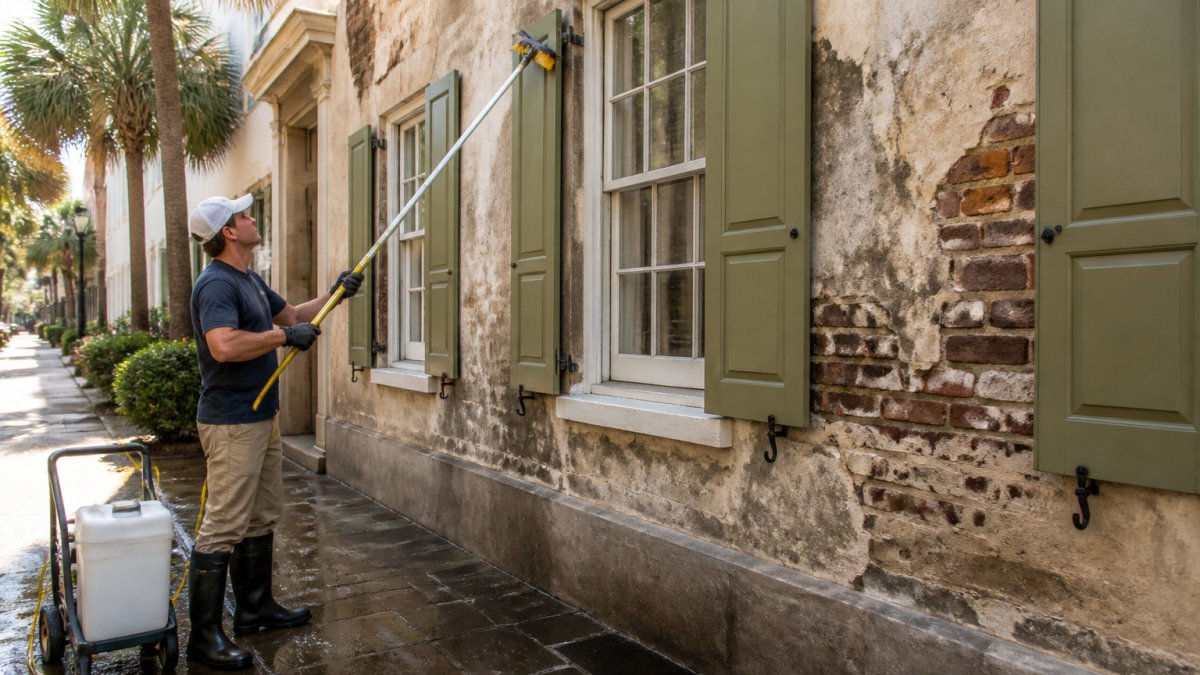
Different materials need different approaches. Vinyl siding is durable but can be damaged by high-pressure water. Wood siding is porous and absorbs water easily. Metal siding can rust if not dried properly. Fiber cement is harder but can crack under pressure. Brick is porous and needs gentle treatment.
Gentle Cleaning vs. Pressure Washing
Soft washing uses low pressure (under 500 PSI) combined with biodegradable cleaning solutions. It kills mold at the root without forcing water into seams or damaging paint, making it ideal for roofs, wood siding, and delicate materials. Pressure washing uses higher pressure (1500-2500 PSI) to blast away dirt and mold.
When to Call a Professional
DIY cleaning works for small areas and nonporous surfaces. But for extensive mold, porous materials, or roofs, professional help is worth it. Professionals have the right equipment, experience with different materials, and insurance, and they know how to apply treatments safely, follow up with preventive measures, and identify moisture sources you might miss.
Common Mistakes That Lead to Mold Regrowth
People make predictable mistakes when fighting mold. Avoiding them saves time and money.
Ignoring the moisture source. The biggest mistake.
Using only bleach. Bleach kills visible mold but doesn't prevent regrowth.
Skipping preventive measures. After cleaning, improve drainage, fix leaks, and control humidity.
Not addressing ventilation. Poor airflow keeps surfaces damp.
Verify the Problem Is Resolved
After cleaning and making repairs, how do you know the problem is fixed? "It hasn't come back yet" is not verification, it is hope. A real verification pass uses measurements and a defined observation window, so you catch a lingering moisture source before mold re-establishes.
Use Tools, Not Just Your Eyes
Visible mold is the last symptom to appear and the first to be cleaned away, so it's the worst indicator of whether the problem is solved. Track these instead:
Moisture meter. Measure the same spots you measured during diagnosis. Readings that stay in the normal range for the material (commonly cited as under about 15-20% wood moisture equivalent for framing and drywall) through a full weather cycle indicate the source is controlled.
Hygrometer. Keep indoor relative humidity in the 30-50% range. If it drifts above roughly 60% for extended periods, conditions favor regrowth even if you see nothing yet.
Your nose. A musty, earthy odor is often the earliest sign of hidden growth, especially in crawl spaces, closets, and behind baseboards. If the smell returns before visible mold does, treat it as a warning, not a coincidence.
A thermal camera or professional inspection. Thermal imaging can reveal cool, damp areas behind walls that a visual check misses. This is worth doing if mold has returned more than once in the same spot.
Set a Realistic Observation Window
Timing depends on moisture, temperature, and material, not a fixed calendar. In warm, humid conditions with an unresolved moisture source, mold can reappear in days to a couple of weeks; in dry conditions with good ventilation and a fixed source, a surface may stay clean for many months or longer. A practical approach is to check at three points:
48-72 hours after cleaning. Confirm the surface is fully dry and no new spotting has appeared.
Two to four weeks out. This is when a missed moisture source usually announces itself. Re-check moisture readings and look for any new discoloration or odor.
After one full seasonal weather cycle. A heavy rain season, a humid summer, or a cold snap is the real test. If the area stays dry and clean through that cycle, you have strong evidence the fix held.
Key Takeaway Recurrence is driven by moisture and remaining contamination, not by a countdown clock. If moisture returns, mold returns, regardless of how long it has been. Verification is about confirming the moisture is gone, not about waiting a set number of months.
Signs the Fix Is Holding
The surface stays dry between rain events and humidity spikes
Moisture meter readings stay in the normal range for the material
Indoor relative humidity stays in the 30-50% range
No musty odor develops in the treated area or nearby rooms
Signs You Missed Something
Mold returns in the same spot within days or weeks
The area feels damp or cool to the touch when nearby surfaces are dry
A musty smell lingers even after cleaning
Moisture readings climb after rain or after running a fixture
If any of these appear, go back to the diagnostic sequence: re-test for leaks, condensation, humidity, and ventilation before you clean again. Cleaning without re-diagnosing just restarts the cycle.
Build a Maintenance Schedule
Prevention is ongoing, not a one-time event. A simple schedule keeps moisture from quietly returning:
Monthly: check under sinks, around the water heater, and near the washing machine for drips or dampness. Look at ceilings and baseboards in bathrooms and kitchens.
Seasonally: clean gutters, confirm downspouts discharge away from the foundation, and inspect caulk and weatherstripping around windows and doors. Replace anything cracked or pulling away.
Before and during humid months: run a dehumidifier as needed and keep indoor humidity in the 30-50% range. Run exhaust fans during and after showers and cooking.
Annually: inspect the roof, attic, and crawl space for stains, damp insulation, or musty odors. Check that exhaust fans still vent to the exterior.
When to Bring In a Professional
If mold keeps returning despite your repairs, or you cannot find the moisture source with a meter and hygrometer, a professional inspection is the efficient next step. Inspectors use moisture meters and thermal imaging to trace hidden moisture behind walls, under floors, and inside cavities, places a visual check cannot reach.
Conclusion
Mold returns after cleaning because moisture remains. Surface cleaning alone doesn't solve the problem.
We at Sunshine Pressure Washing and Window Cleaning understand the frustration of recurring mold.
If mold keeps returning despite your efforts, or if you want professional cleaning to prevent regrowth, [GET A QUOTE] from Sunshine Pressure Washing and Window Cleaning today.
Frequently Asked Questions
Why does mold return after cleaning if I use bleach or other treatments?
Bleach and surface disinfectants kill visible mold colonies but don't address the underlying moisture that allows regrowth. Mold spores survive in porous materials and on surfaces where moisture persists. If the source of dampness, a leak, condensation, or poor ventilation, remains unresolved, mold will return within days or weeks. Effective prevention requires eliminating moisture, not just the visible growth.
How long does mold take to return after cleaning?
Mold can return within 24 to 48 hours if moisture is still present. In humid environments or areas with active water intrusion, regrowth may be visible within a week. The timeline depends on humidity levels, ventilation, and whether the moisture source has been fixed. Mold spores are always present in the air; they need only moisture and organic material to colonize again, making moisture control the key to preventing recurrence.
What should I do if mold keeps coming back in the same spot?
Recurring mold in one location signals a persistent moisture problem in that area. Start by inspecting for hidden leaks, condensation buildup, or poor airflow. Check plumbing behind walls, roof leaks, or window seals. If the spot is on porous material like drywall or wood, mold spores may be embedded deep inside. You may need professional remediation to remove affected material and identify the moisture source. A diagnostic inspection can pinpoint whether the issue is a leak, humidity, or ventilation.
Can I remove mold from siding myself, or should I hire a professional?
Small mold patches on nonporous siding can sometimes be cleaned with gentle methods, but improper pressure washing can damage paint and siding. Porous materials like wood or older siding require professional care to avoid surface damage and ensure the mold is truly removed. Professionals use appropriate cleaning treatments, assess moisture sources, and employ techniques that protect your property's integrity. If the mold is extensive, on fragile surfaces, or keeps returning, professional remediation is the safer choice.
GET A QUOTE

Comments